The Cognitive Cost of Context Switching: Why Your Brain is Exhausted by 2 PM
Research shows multitasking lowers your IQ more than losing a night's sleep. Here is the science-backed framework to reclaim your focus.
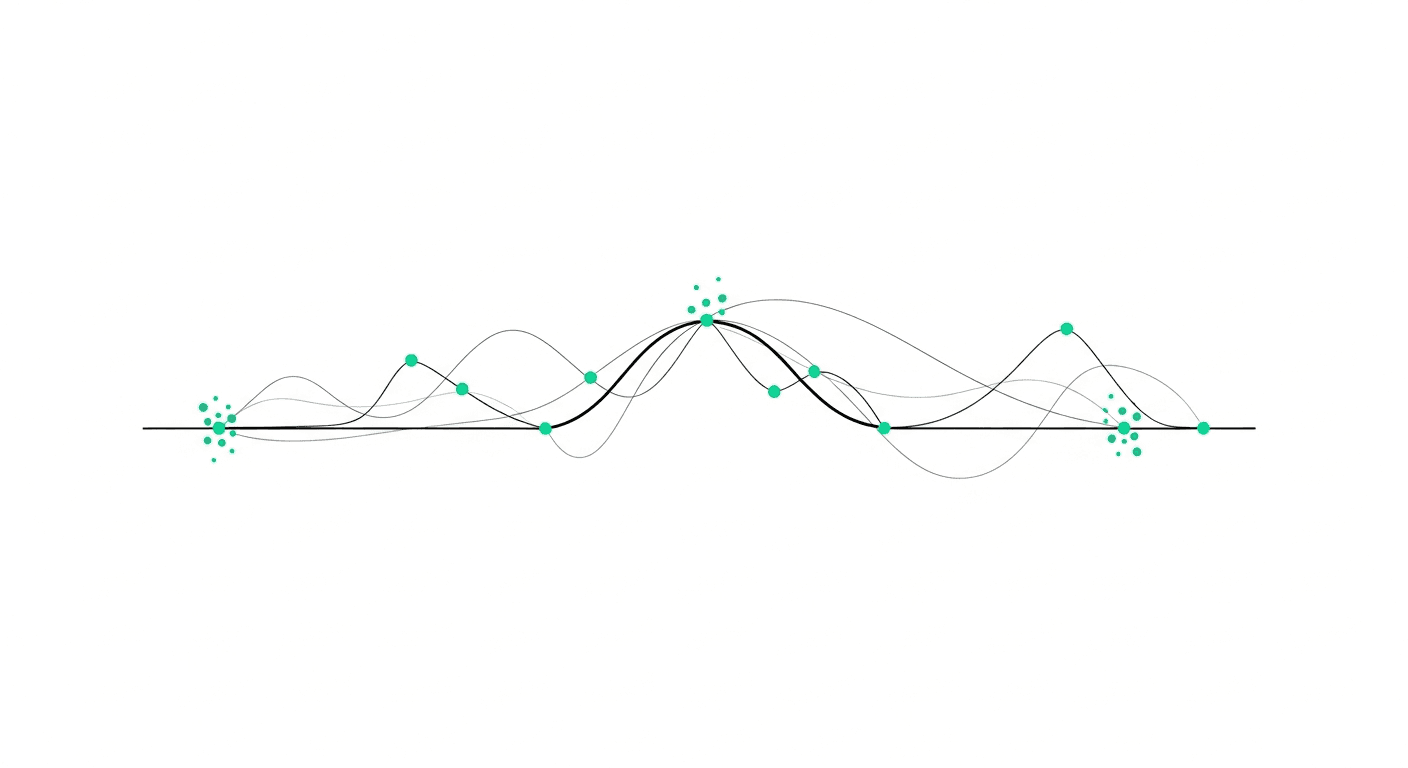
It is 9:03 AM. You sit down to draft a critical strategy document. You type the first sentence, feeling the flow begin to take hold. Suddenly, a notification slides onto your screen: a WhatsApp message from the marketing team asking for a quick approval. You click it, type a 'thumbs up,' and return to your document. But now, the cursor blinks mockingly. You have forgotten your train of thought. You check your email 'just quickly' to reset. Ten minutes later, you are deep in a thread about office snacks, and the strategy document remains untouched. By 2 PM, despite feeling incredibly busy, you realize you have accomplished almost nothing of substance.
This scenario is the defining struggle of the modern knowledge worker. We treat our attention like a strobe light, flashing rapidly between disparate focal points—Email, WhatsApp, Telegram, Jira, Slack—believing we are multitasking effectively. We aren't. We are suffering from 'context switching,' a cognitive habit that is quietly eroding our ability to perform deep work and leaving us in a state of perpetual, exhausted distraction.
The Science: The High Price of 'Attention Residue'
We often pride ourselves on our ability to juggle, but neurology tells a different story. The human brain is not wired for parallelism; it is wired for serial processing. When you switch tasks, your brain doesn't instantly pivot; it drags the baggage of the previous task with it.
1. The Cost of Re-Focusing According to renowned research by Gloria Mark at the University of California, Irvine, it takes an average of 23 minutes and 15 seconds to get back on track after an interruption. If you are interrupted three times in an hour, you are mathematically incapable of reaching a state of flow. The study highlights that people compensate for these interruptions by working faster, but this comes at a steep price: significantly higher stress, frustration, and time pressure.
2. Attention Residue Sophie Leroy, a professor at the University of Minnesota, coined the term Attention Residue. Her research demonstrates that when you switch from Task A to Task B, your attention doesn't immediately follow. A portion of your cognitive processing power remains stuck on Task A. This 'residue' means you are processing Task B with diminished cognitive capacity. If you rapidly toggle between WhatsApp for work, email for clients, and a spreadsheet for data, your brain is effectively operating with a fraction of its IQ. In fact, a study commissioned by Hewlett-Packard found that the distraction of constant connectivity lowered functional IQ by an average of 10 points—more than double the effect of smoking marijuana.
The Framework: The Unified Focus Method
To combat the friction of modern work, you cannot simply 'try harder' to focus. You need a structural change in how you handle information. We call this the Unified Focus Method.
-
Consolidate Inbound Vectors The average worker toggles between apps up to 1,200 times a day. To stop the bleeding, you must reduce the number of places you check. Instead of having five inboxes (Email, WhatsApp, Telegram, Slack, Teams), aim to funnel them into a single dashboard or workflow. The goal is to move from a 'Pull' model (checking apps constantly) to a 'Push' model (important items surface in one place).
-
The 'Touch It Once' Rule When a notification arrives, cognitive load increases if you look at it, decide to deal with it later, and leave it there. This creates an 'open loop' in your brain. Batch processing is the antidote. Set specific times to process communications and handle each item immediately: delete it, delegate it, do it (if under 2 mins), or defer it to a formal task list. Do not let it linger in the inbox.
-
Externalize Your Working Memory Your brain is for having ideas, not holding them. When a thought pops up during deep work (e.g., "I need to call John"), do not switch apps to do it. Write it down immediately in a trusted system and return to work. This offloads the cognitive burden without breaking the context of your current task.
Practical Application: Real-World Scenarios
How does this look in practice for a busy professional juggling multiple platforms? Let’s look at two scenarios using the tools you already have.
Scenario A: The WhatsApp Trap The Old Way: You are in a meeting. A client messages you on WhatsApp with urgent feedback. You read it, stress about it, and try to remember it for later. By the time you get back to your desk, you've forgotten the details, or worse, the message is buried under 50 other family chats. The New Way: You use Hello Aria. When the client messages on WhatsApp, you simply forward that message to your Aria contact or type a quick command in your Aria chat: "Remind me to update the slide deck based on this feedback at 4 PM." Aria instantly captures this into your central task list (synced with Google Tasks or Microsoft To Do). You archive the chat and immediately return to your meeting, knowing the task is safe. Zero context switching required.
Scenario B: The Meeting Note Chaos The Old Way: You finish a client call. You have scribbles on a notepad, a few action items in your head, and a follow-up email to draft. You open your laptop, open your CRM, open your email, and start transcribing. Friction is high. The New Way: Immediately after the call, you open Telegram or WhatsApp and send a voice note to Hello Aria: "Meeting with Apex Corp. They want to move forward with Q3 plans. Action items: Send contract by Friday, schedule kickoff with design team." Aria uses AI to transcribe the note, extract the action items, populate your Todo list, and draft the follow-up email for you. You did this while walking to your car. You captured value without opening a laptop.
High-Performer Takeaway
The most productive people aren't the ones who work the fastest; they are the ones who protect their cognitive bandwidth the most fiercely. The science is clear: Context switching is the enemy of excellence.
To reclaim your productivity, you must stop treating your brain like a browser with 50 open tabs. You need a central nervous system for your work—a place where reminders, todos, and notes converge, regardless of where they originated. Hello Aria solves this by meeting you where you already are. By integrating deeply with WhatsApp, Telegram, Google Workspace, and Microsoft 365, Aria removes the need to toggle apps to capture information. It allows you to stay in the flow, offload the mental noise, and focus on the deep work that actually moves the needle.