The Science of Cognitive Offloading
Why trying to remember everything is destroying your productivity—and the neuroscience-backed framework to fix it.
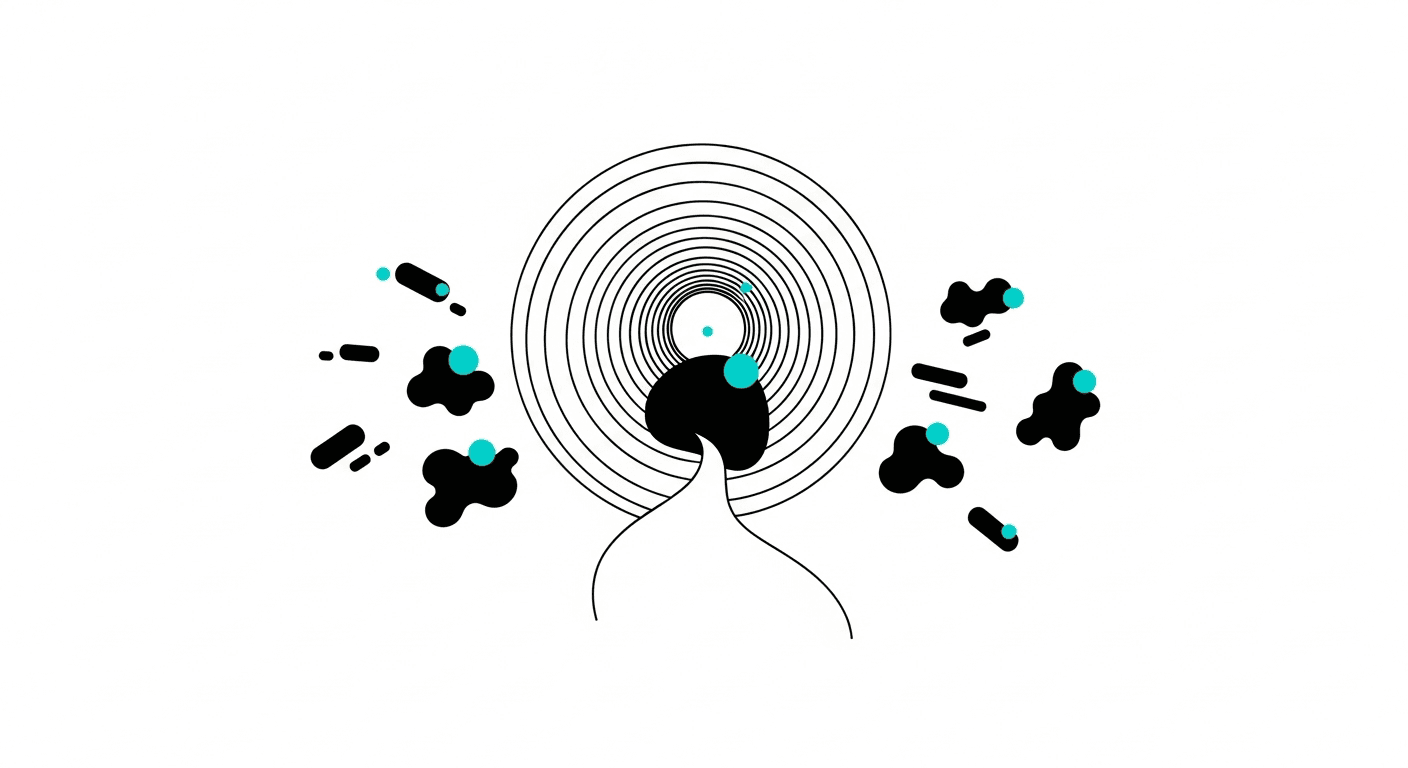
Have you ever walked into a room and completely forgotten why you went there? Or found yourself reading the same paragraph in a strategic report three times, your eyes moving but your brain refusing to process the words? This isn't just fatigue; it's a symptom of 'cognitive overflow.' In our hyper-connected world, we treat our brains like infinite storage hard drives, cramming them with grocery lists, meeting action items, Slack notifications, and strategic insights. We are terrified that if we stop thinking about a task, we will lose it forever. The irony is that by trying to hold everything in our heads, we degrade our ability to execute on anything effectively.
Imagine your working memory is a glass of water. Every uncaptured task, every 'I need to email John later,' and every unrecorded date is a drop of water. Eventually, the surface tension breaks, and the water spills over. In a professional context, this spillover looks like missed deadlines, shallow work, and decision fatigue. But there is a solution used by elite performers, from chess grandmasters to Fortune 500 CEOs. It’s not about getting a bigger glass; it’s about pouring the water into a pitcher so you can refill the glass with fresh creativity. This is the art of cognitive offloading.
The Science
The concept of Cognitive Offloading is rooted in the theory of Distributed Cognition, originally proposed by Edwin Hutchins in the 1990s. The core premise is that cognition doesn't just happen inside the skull; it happens in interaction with the environment. When you write a math problem on paper to solve it, the paper becomes part of your cognitive process.
A pivotal study published in Trends in Cognitive Sciences by researchers Evan Risko and Sam Gilbert (2016) explored this phenomenon deeply. They found that humans naturally tend to offload cognitive demands onto the environment when the internal processing cost becomes too high. Essentially, our brains are wired to conserve energy. When we try to fight this by 'keeping it all in our head,' we are fighting our biological imperative for efficiency.
Furthermore, research into the Zeigarnik Effect—the psychological phenomenon where uncompleted tasks take up more mental bandwidth than completed ones—compounds the issue. A study from Florida State University showed that you don't actually have to complete the task to silence the Zeigarnik effect; you simply need to have a concrete plan for how and when you will do it. The act of offloading the task to a trusted system tells your brain, 'It is safe to stop worrying about this now.' This releases neural resources, specifically in the prefrontal cortex, allowing you to focus deeply on the task at hand without the background noise of pending obligations.
The Framework
To move from a state of mental clutter to clarity, you need a system that mimics the reliability of your own memory but without the biological limitations. We call this the External Brain Protocol.
- Capture Velocity: The speed at which you can move a thought from your brain to an external medium is the most critical metric in personal productivity. If it takes you 30 seconds to open an app, categorize a task, and type it out, you won't do it. The friction is too high. You need a system that operates at the speed of thought.
- Unified Ingestion: Most professionals have fragmented capture points: starred emails, Slack saved items, browser tabs, and sticky notes. This fragmentation creates anxiety because you never know if you've checked every inbox. A robust framework requires a single 'funnel' where all inputs land before being processed.
- Contextual Triggers: Offloading is useless if retrieval fails. A note that says 'Call mom' is less effective than a reminder triggered by the context 'When I am leaving work.' Effective offloading requires attaching metadata (time, location, or project context) to the memory artifact.
- Periodic Flushing: Just as computer RAM needs to be cleared, your external brain needs review. If you dump tasks into a system and never look at them, your brain will stop trusting the system. Once trust is broken, your brain resumes hoarding the information, and the stress returns.
Practical Application
How does this translate to your chaotic Tuesday morning? Here are three real-world scenarios where you can apply cognitive offloading immediately.
1. The 'Commuter's Epiphany' You are driving or on the subway, and you suddenly solve a complex problem regarding the Q3 marketing budget. You can't type, and if you try to remember it until you get to the office, you'll lose the nuance.
- The Old Way: Repeat the idea mantra-like in your head, creating stress and distracting you from the commute.
- The Cognitive Offloading Way: Use a voice-first interface. With Hello Aria, you simply send a voice note via WhatsApp: 'Note on Q3 budget: shift allocation from paid social to influencer partnerships based on last month's ROI data.' Aria transcribes this, tags it as #finance, and places it in your 'Deep Work' folder. Your brain is instantly free to listen to a podcast or just relax.
2. The 'Meeting Cross-Fire' You are in a Zoom call about product design, but the VP of Sales mentions an urgent issue with a client contract. It’s irrelevant to the current meeting but critical for your afternoon.
- The Old Way: Write it on a sticky note that gets lost, or switch tabs to your email, losing focus on the design discussion.
- The Cognitive Offloading Way: Stay in the flow. Open your Telegram chat with Aria and type: 'Remind me to email Sarah about the contract at 2 PM.' The loop is closed. You remain present in the design meeting, appearing more engaged and professional than your multitasking colleagues.
3. The 'Inbox Avalanche' You receive an email with a file that needs review, but you can't look at it until Thursday. Leaving it in the inbox (even marked as unread) acts as a visual stressors every time you open your mail.
- The Old Way: Let it bury other emails, or flag it and forget it.
- The Cognitive Offloading Way: Forward the email directly to your Hello Aria inbox address. Aria parses the content, creates a task due Thursday, and attaches the file link. You archive the email immediately. Inbox Zero is preserved, and the task is safely queued in your Microsoft 365 or Google Workspace ecosystem.
High-Performer Takeaway
The most productive people aren't the ones who remember the most; they are the ones who are most effective at forgetting. By trusting a system to hold the details, they liberate their higher-order thinking for strategy, empathy, and innovation.
David Allen, the father of modern productivity, famously said, 'Your mind is for having ideas, not holding them.' In the modern era, Hello Aria acts as the bridge between that philosophy and your digital reality. By meeting you where you already are—on WhatsApp, Telegram, or Email—Aria removes the friction of capture. It integrates seamlessly with Google Workspace and Microsoft 365, ensuring that when you offload a thought, it lands exactly where you need it to be.
Stop paying the high cognitive tax of trying to remember everything. Offload the noise, and reclaim your brain for the work that actually matters.