Mastering Cognitive Offloading: Stop Using Your Brain for Storage
Why your mental RAM is full and how to externalize your tasks for peak performance.
Have you ever walked into a room and immediately forgotten why you entered? Or found yourself reading the same email paragraph three times without absorbing a word? It feels like you’re losing your edge, but the reality is much simpler: your mental browser has too many tabs open. We treat our brains like hard drives, stuffing them with grocery lists, meeting agendas, and half-baked ideas. But the human brain is a high-performance processor, not a storage device.
This friction is the silent killer of productivity. It’s not that you aren't capable of doing the work; it's that the sheer metabolic cost of remembering what to do is draining your energy before you even start. The relatable struggle of the modern professional isn't a lack of discipline—it's an overflow of working memory. By holding onto tasks mentally, you are actively sabotaging your ability to execute them. The solution isn't to train your memory; it's to stop using it for mundane data altogether.
The Science
The phenomenon of removing information from our internal memory to an external source is known in academic circles as Cognitive Offloading. A pivotal review by Evan F. Risko and Sam J. Gilbert, published in Trends in Cognitive Sciences (2016), highlights that offloading isn't just a convenience—it is a fundamental strategy to overcome the limited capacity of our cognitive system.
Research indicates that our working memory has a strict capacity limit (often cited as Miller’s Law: 7 ± 2 items). When we approach this limit, our processing speed slows down, and our error rate spikes. A study involving "intention offloading" demonstrated that participants who set external reminders for tasks not only performed those tasks more reliably but also performed better on concurrent tasks because their cognitive load was reduced. Essentially, when you write a task down or set a reminder, you aren't just ensuring you don't forget it; you are reclaiming the neural resources required to hold that intention in your mind, freeing them up for deep work and problem-solving.
The Framework
To implement cognitive offloading effectively, you need a system that is faster than your own memory. If the friction of recording a thought is higher than the effort to remember it, you will default to remembering, and the system fails. Here is the framework for a friction-free external brain:
- Capture at the Speed of Thought: The moment a commitment enters your consciousness, it must be offloaded. The gap between "I need to do this" and "It is recorded" must be measured in seconds. If you have to open an app, wait for it to load, and navigate three menus, you've already lost.
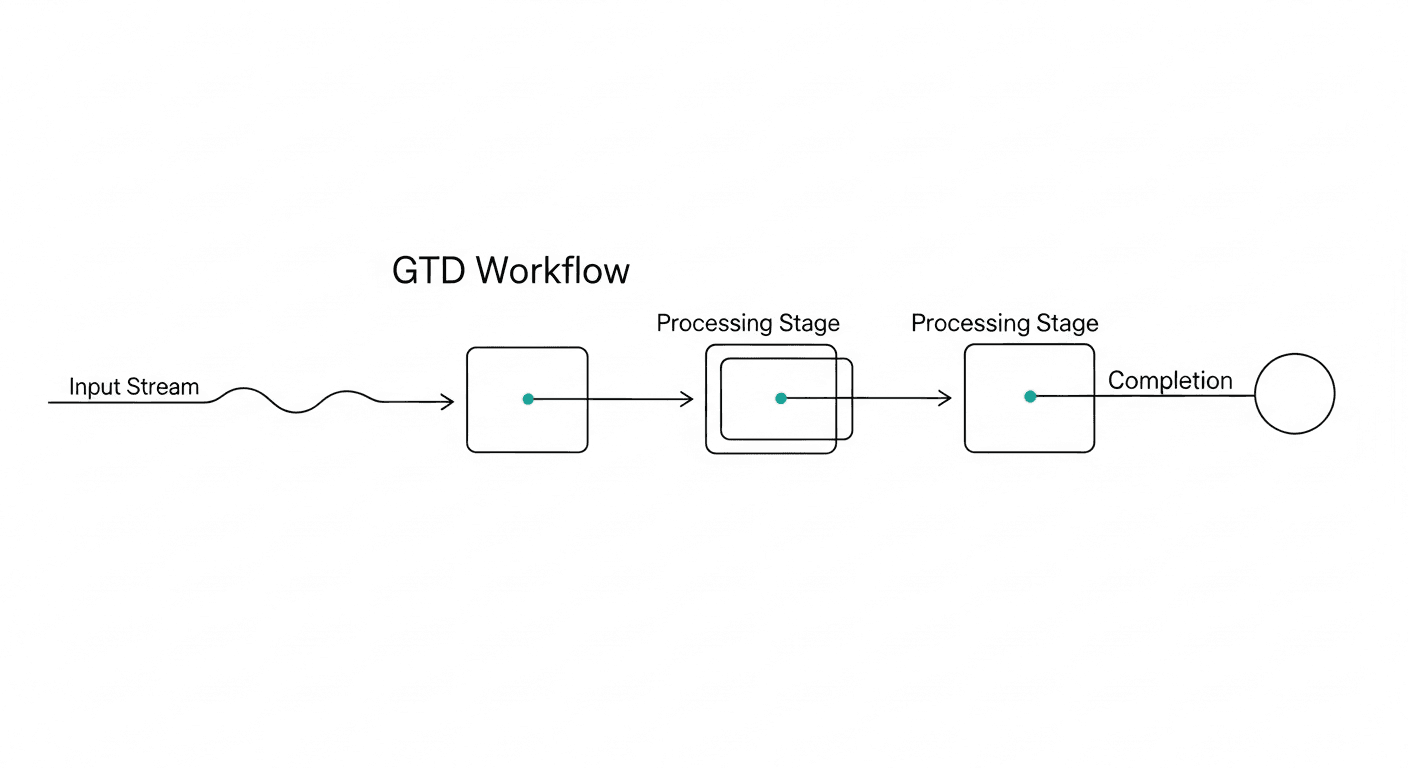
- Unified Ingest Stream: Do not segregate your inputs. Work tasks, personal errands, and random ideas should all enter the same funnel initially. Segregating them at the moment of capture adds a decision tax ("Which app does this go in?") that creates resistance.
- Contextual Triggers: Offloading is useless if retrieval fails. Information must be stored with a trigger—either a time (remind me at 9 AM) or a context (remind me when I'm at the computer).
- The Trust Loop: Your brain will only let go of the information if it trusts the external system. This requires a daily review or reliable notification system. If your external brain fails you once, your biological brain will resume hoarding data out of fear.
Practical Application
How does this look in the real world? Let’s move away from theory and into the chaotic reality of a workday. Here is how you can apply cognitive offloading using the tools you already have, specifically leveraging Hello Aria as your central intake valve.
1. The "WhatsApp Forward" Method You receive a request from a client on WhatsApp while you are in the back of a taxi.
- Old Way: You read it, stress about it, mark it as unread, and hope you remember to check it when you get to your laptop. The "open loop" drains you for the rest of the ride.
- New Way: You immediately forward the message to Hello Aria on WhatsApp. You add a quick note: "Draft proposal for this by Tuesday." Aria parses the text, integrates with your Google Workspace or Microsoft 365 calendar, and sets a reminder. The loop is closed instantly. You can now enjoy the taxi ride.
2. The Meeting Decompression You just finished a heavy Zoom call. Your head is swimming with action items.
- Old Way: You rush to the next call, promising yourself you'll type up notes later. By 5 PM, the details are foggy.
- New Way: You open your Hello Aria chat and dictate a voice note: "Meeting with Marketing. Key takeaways: Budget approved for Q3, need to email Sarah about the graphics, set up a review for Friday." Aria transcribes the voice note, extracts the todos, and emails the summary to your team circle. You have offloaded the cognitive burden of the meeting in 30 seconds.
3. The "Shower Idea" Saver We often get our best ideas when we can't write them down.
- Old Way: You repeat the idea over and over in your head so you don't lose it, ruining your relaxation.
- New Way: You step out, grab your phone, and type a quick shorthand message to Aria on Telegram or WhatsApp. Aria logs it into your 'Ideas' list in your connected notes app. Your mind is free to wander again.
High-Performer Takeaway
The most productive people aren't the ones who remember the most; they are the ones who need to remember the least. By aggressively outsourcing memory to a reliable system, you protect your brain's highest function: processing and synthesis.
Hello Aria is built specifically for this scientific reality. It meets you where you already are—on WhatsApp, Telegram, or Email—eliminating the friction of capture. Whether it’s turning a messy brain dump into a structured Microsoft 365 todo list or syncing a quick reminder to your Google Calendar, Aria acts as the perfect cognitive safety net. Stop trying to upgrade your memory. Upgrade your system.